Bali always has something interesting to learn about its culture, and the Balinese purification ritual, known as melukat, is one of the things you should take a closer look at. As the name suggests, this is a spiritual purification custom for the self and the soul, using holy water within the Balinese Hindu tradition.
This ritual is one testament to the island’s rich heritage and has existed for hundreds of years. If you want to learn more about it, this article will provide in-depth information on what melukat means and how it’s practiced today.
What Is the Balinese Purification Ritual?
The Balinese purification ritual is called melukat locally. Based on its etymology, melukat comes from the word “sulukat,” where su means good and lukat means purification.
Besides that, it is also rooted in the base word from Classical Javanese (Kawi), “lukat,” which means to release, remove, or free. In short, it can be described as a cleansing practice that leads toward goodness.
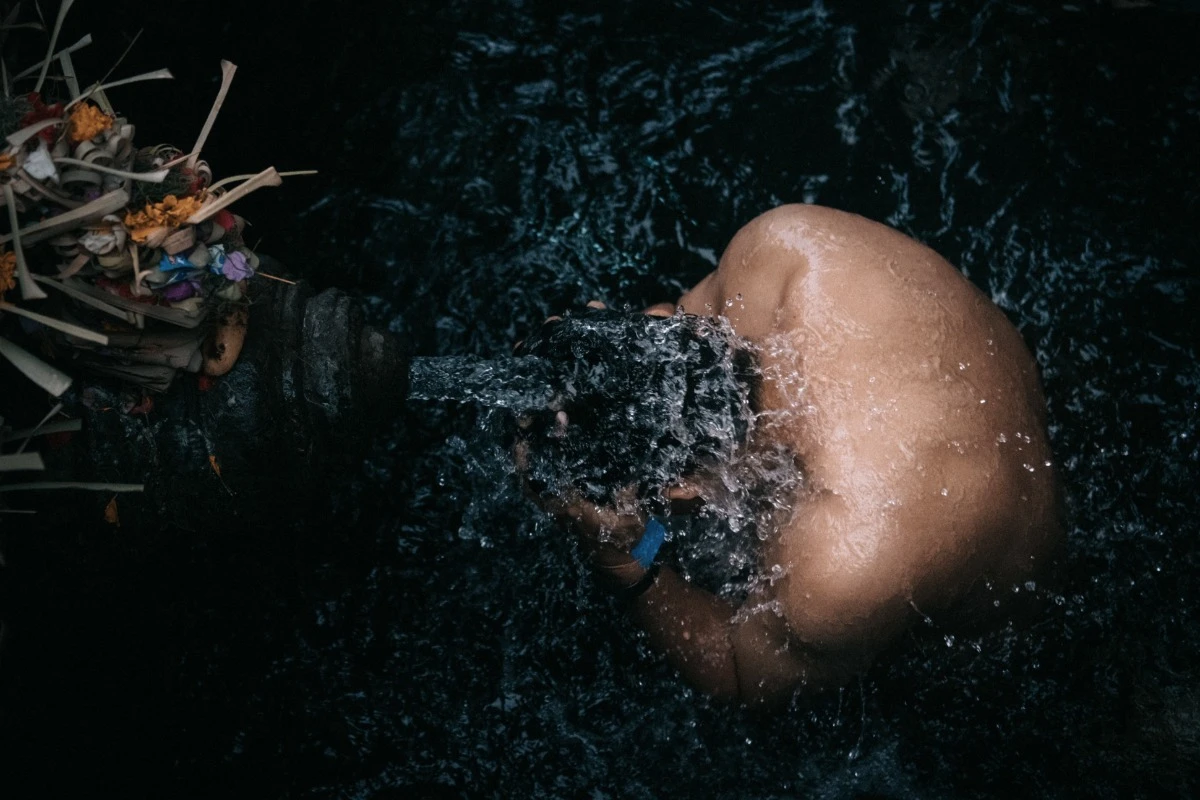
This ritual has always involved water as the medium of purification, whether it’s from a natural spring, the confluence of rivers, or the ocean. Water is regarded as the primary purifying symbol on earth, capable of absorbing and washing away negative energy, or leteh/mala.
It is usually blessed first by a religious leader (pemangku or sulinggih), transforming it into tirta, holy water believed to carry spiritual power.
The negative energy purified through this ritual falls into several categories:
- Sad Ripu, the six bad traits within humans: kama (lust), lobha (greed), krodha (anger), moha (confusion), mada (arrogance), and matsarya (envy)
- Tri Mala, the three deviant behaviors: kasmala (dirty deeds), madana (dirty speech), and mohana (dirty thoughts)
- Leteh caused by life events (sebala-bela): this includes cuntaka/sebel, a period of mourning after a family member’s death, after childbirth, or a woman’s menstrual cycle, as well as recurring nightmares and prolonged illness that resists healing
- External negative influences (niskala): energy picked up from mystical disturbances, such as sawan (residual energy after visiting a haunted place, a graveyard, or a home in mourning) or kena cetik/bebahi (exposure to mystical poison or black magic)
- Papa klesa: within the Balinese Hindu concept of karma, every person is born carrying residual energy from past lives, and this energy can sometimes be negative (klesa)
Melukat in Bali is a tradition rooted in sacred texts and the practice of self-purification (samskara), and it serves as one of the ways Balinese Hindus preserve Tri Hita Karana, the harmony across three relationships: with God, with other people, and with nature, for the sake of inner peace.
Why Balinese Hindus and Travelers Both Take Part?
At first, this tradition was only practiced by the local Hindu community in Bali, but nowadays, many travelers also take part in experiencing melukat, the Balinese purification ritual.
For Balinese Hindus, this is usually a religious obligation rather than merely an optional choice. They typically perform the ritual on specific days marked by the local calendar, such as during Purnama (full moon), Tilem, or Kuningan, as well as during key life events like after giving birth, before a major ceremony, or while grieving, and whenever they feel the need to cleanse themselves of leteh and mala.
Although this practice carries religious significance, travelers are still welcome to take part. Many visitors try melukat nowadays for a variety of reasons, most commonly to experience Balinese culture or to seek relaxation and wellness, rather than out of a sense of duty.
While the motivations behind travelers and the local community differ, both groups treat the ritual with the same respect, regarding it as something sacred rather than merely a tourist attraction.
Inside the Sacred Sequence of a Melukat Ceremony
In Balinese Hindu tradition, melukat traditionally consists of four stages: mebayuh, the alignment with one’s day of birth; penglukatan, the purification of body and soul; mebija, the cleansing of mind and spirit; and the tying of the tridatu thread for spiritual protection. Here’s what each stage involves:
- Mebayuh (Aligning with Your Day of Birth): Melukat begins with this stage, where you sit facing the bayuan offering while a priest or high priest recites a redemption mantra to neutralize any negative traits inherited from birth.
- Penglukatan (Purification of Body and Soul): In this second stage, your body is showered with holy water, tirta, or young coconut water. This washes away negative energy, illness, and spiritual impurities.
- Mebija (Cleansing of Mind and Spirit): Once the melukat and prayers are complete, blessed rice, or bija, is placed on your forehead, chest, and neck, or swallowed. This symbolizes that your mind and soul have returned to purity and are ready to receive prosperity.
- Tridatu (Spiritual Protection): This is the final stage, where a three-colored thread of red, white, and black is tied around your right wrist as a spiritual shield and a blessing for protection, representing the Trimurti: Brahma, Vishnu, and Shiva.
Where the Ritual Is Traditionally Practiced?
If you’re wondering where to experience melukat in Bali, the ritual traditionally takes place at sanctified natural springs, beji temples, riverbanks, cliffs or waterfalls, and campuhan, the point where river water meets the sea. Here are some popular places you can visit for this ritual:
Temples and Sacred Water Springs (Pertirtaan)
- Pura Tirta Empul (Tampaksiring, Gianyar)
- Pura Tirta Sudamala (Bebalang, Bangli)
- Pura Mengening (Tampaksiring, Gianyar)
Campuhan Area (Where River Meets Sea)
- Pura Campuhan Windhu Segara (Padang Galak, Denpasar)
Waterfalls and River Valleys (Taman Beji)
- Taman Beji Griya Waterfall (Punggul, Badung)
- Taman Beji Samuan (Carangsari, Badung)
Temple Ceremony or Private Guided Ritual, Choosing What Fits You
To experience melukat firsthand, you can typically take part through a public temple ceremony on your own or through a private guided ritual. So, which one suits you best? Here’s how they differ:
| Aspect | Public Temple Ceremony | Private Guided Ritual |
| Setting | Open and communal, shared with other worshippers | Intimate, usually one-on-one or a small group |
| Guidance | Self-directed, or loosely guided by temple staff | Personally guided by a dedicated priest from start to finish |
| Cost | Free or by donation | Fixed package price |
| Booking | Walk-in, no reservation needed | Requires booking |
| Timing | Flexible, though busiest during holy days like Purnama or Kajeng Kliwon | Often scheduled around a specific date or personal occasion |
| Best for | Travelers who want an authentic, low-key cultural experience | Travelers seeking privacy, personalization, or marking a specific moment |
How the Wariga Calendar Shapes a More Personal Purification?
The Wariga calendar is a traditional Balinese system of timekeeping used to determine auspicious days for various ceremonies practiced by the local community, including the melukat ritual.
Beyond communal auspicious days such as Purnama, Tilem, or Kajeng Kliwon, which apply to everyone, Wariga can also be calculated based on a person’s day of birth, known as weton or oton, to determine the most personally suited time for melukat.
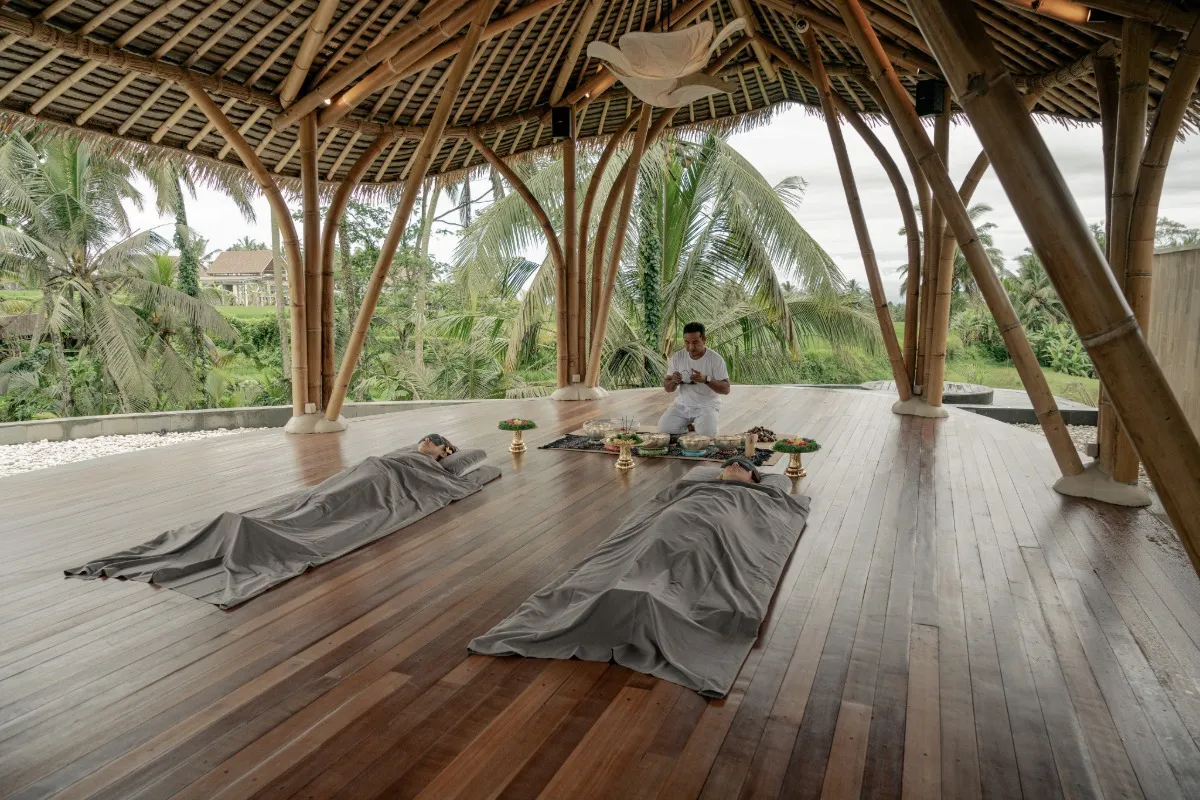
So when you want to do melukat, the timing can be calculated specifically around your birth date, rather than simply following a generally auspicious day. This kind of calculation is usually easier to accommodate through private ritual providers, as they can adjust the schedule according to your weton or oton calculation.
Meanwhile, for rituals performed publicly, people typically arrive on the same auspicious day, with no personal adjustment based on each individual’s birth date.
Etiquette Every Visitor Should Know Before Taking Part
To take part in the Balinese purification ritual, you’ll need to follow certain rules and etiquette, including what to bring and wear during the ceremony, as well as a few things to avoid.
What to Wear and Bring
What to wear:
- Sarong (kamen): wrapped around the lower body, usually provided on-site if you’re joining a guided tour
- Sash: tied around the waist over the sarong
- Modest top: women are advised to cover their shoulders, while men can simply wear a T-shirt or short-sleeved shirt
- A change of clothes: since your body will be soaked after the ritual, it’s best to bring spare clothing and underwear
- A small towel: to dry off afterward
What to bring:
- Canang sari: a small floral offering, usually required to begin the ritual
- Incense: lit as part of the offering
- At some sites (such as Pura Tirta Sudamala), you may also be asked to bring kembang 7 rupa (seven types of flowers) and sometimes pejati (a more elaborate offering) as an additional requirement
- Punia (donation money): for sites that don’t charge a formal entrance fee
Respecting the Cuntaka Rule and the Priest’s Lead
According to local belief, there is a rule known as cuntaka that determines who is not allowed to take part in the ritual. This refers to a temporary state of spiritual impurity that prevents someone from joining.
Those who are not permitted to take part include women who are menstruating, anyone who has recently lost a family member, or those who are bleeding due to childbirth or an open wound.
Once you’re ready to begin, the ritual should always be guided by a pemangku rather than done independently without direction. The pemangku will typically guide you through every step, and you must follow along with full respect and sincerity.
What to Expect in the Hours After a Purification Ritual
If you take part in this ritual, the effects felt an hour afterward can vary from person to person. Some feel nothing at all, while others experience sadness or anger first before eventually settling into a sense of calm, and all of these reactions are considered normal, as emotions that have been held in are being released as part of the ritual’s process.
As for the physical effects, the body usually feels lighter and more refreshed, though some people may feel slightly more tired after releasing those emotions. The results felt after the ritual depend heavily on each person’s belief and sincerity while undergoing it, not solely on the holy water itself.
Common Questions About the Balinese Purification Ritual
- How much does it cost to attend a Balinese purification ceremony?
The cost of attending a Balinese purification ceremony, or melukat, varies. If you join a public ceremony, the price is usually based on how much you’re willing to donate. If you book a private guided ritual, on the other hand, there’s typically a fixed fee to pay. In general, prices can range from around IDR 75,000 (roughly $5 USD) to IDR 1,500,000 (roughly $95 USD) or more. - Can you drink the water at Tirta Empul?
The water at Tirta Empul is often used for melukat, but it shouldn’t be consumed, as it’s untreated and can make you sick. It’s intended solely for ritual use.
Letting the Ritual’s Meaning Travel With You
Melukat, or the Balinese purification ritual, reflects just how deep and varied Bali’s traditions run, something worth learning about or even experiencing for yourself. Rooted in Hindu belief, it has also become widely embraced as a form of Balinese wellness, drawing both worshippers and travelers seeking a moment of calm.
Beyond melukat, Bali is home to many other traditions of self-cleansing and healing. If you’d like to experience something similar, Hammana Spa Ubud‘s Rituals page has more for you to experience.