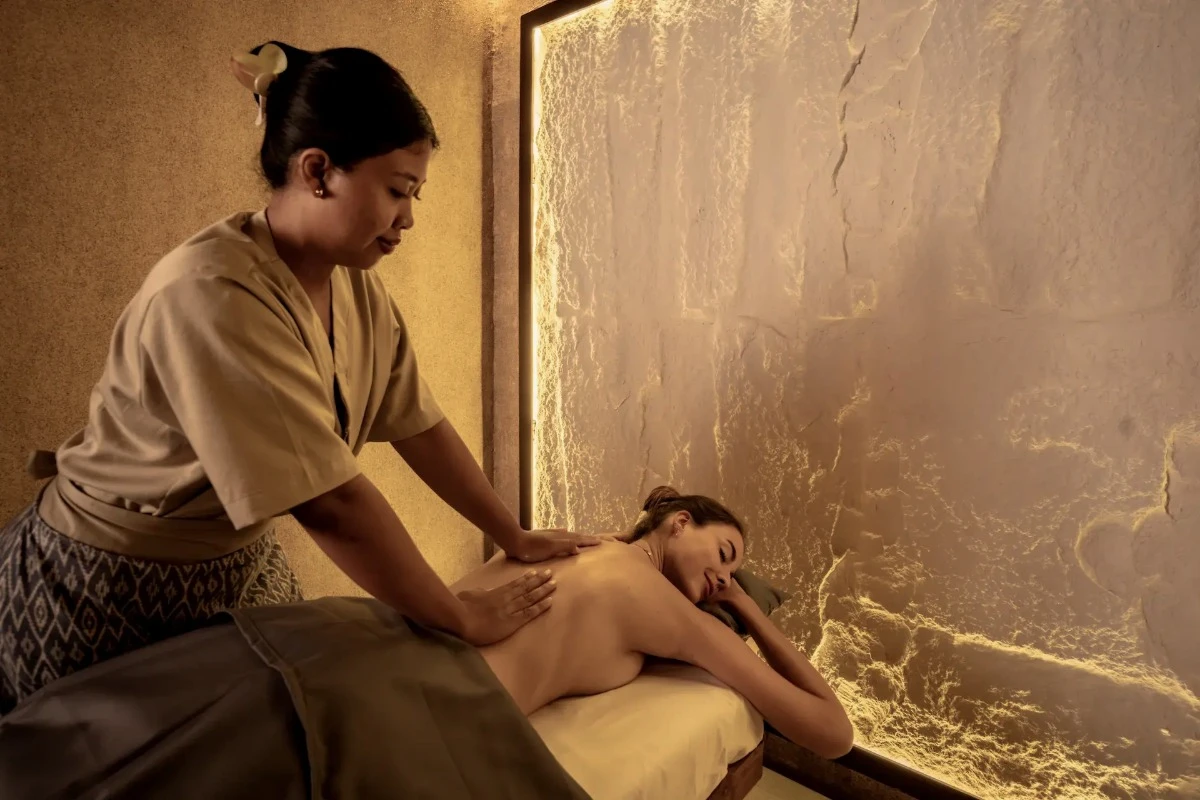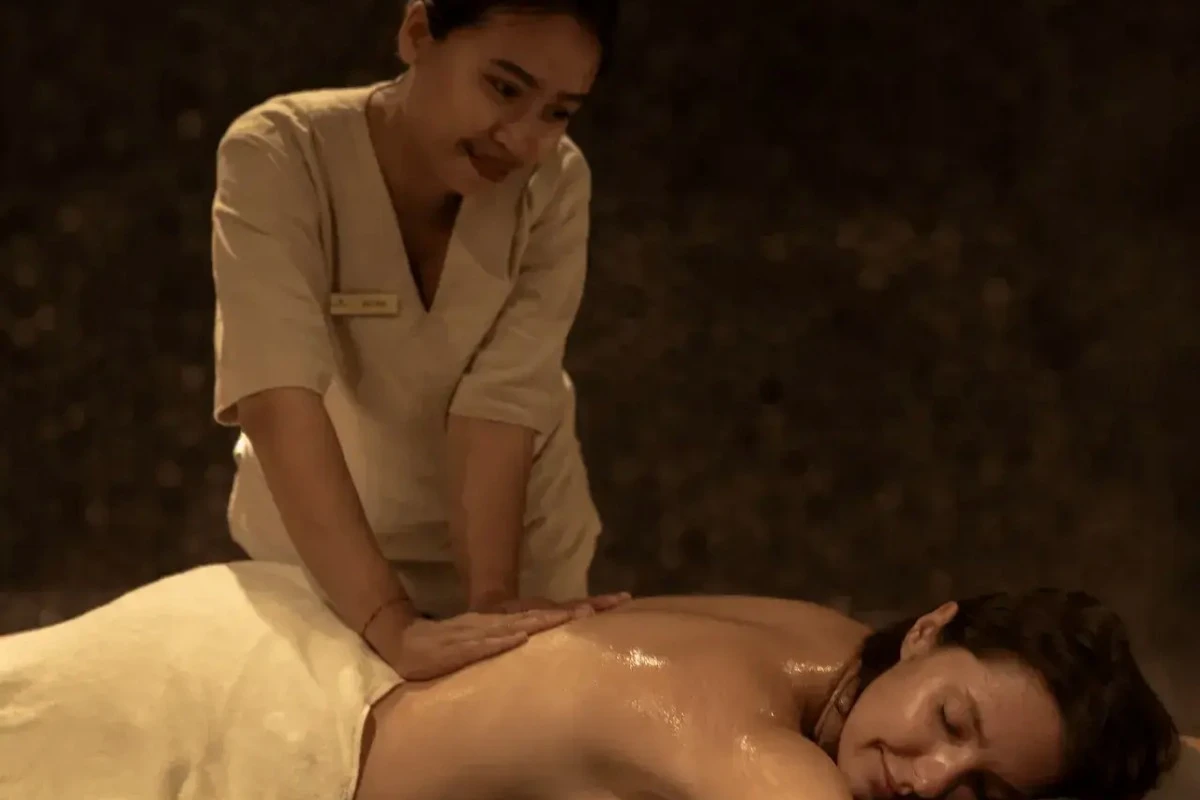
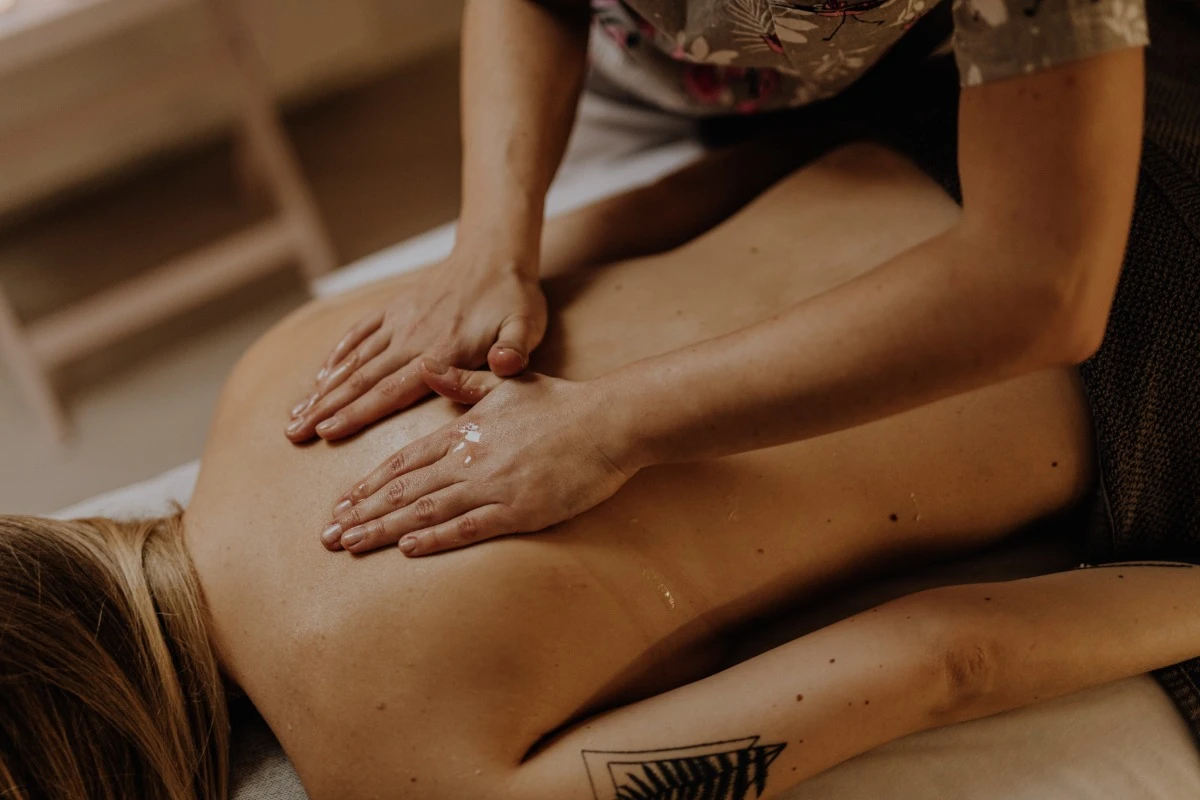
Deep tissue vs Balinese massage is a common comparison, as many people mistake the two for the same technique. Although Balinese massage can use firm pressure similar to deep tissue, it also combines other methods such as flowing strokes, acupressure, and gentle stretching, while deep tissue focuses on slow, sustained pressure on the deeper layers of muscle and connective tissue.
Simply put, deep tissue and Balinese massage are two distinct styles, and each offers its own benefits depending on your body’s condition and the experience you are looking for. In this article, we provide a full guide to deep tissue vs Balinese massage to help you choose the one that suits you best.
What Is a Balinese Massage?
Traditional Balinese massage is a full-body therapy from Bali that combines several techniques, including soft to deep pressure, acupressure, reflexology, skin rolling, kneading, and aromatherapy. It aims to ease stiff muscles, support healthy circulation, reduce stress and worry, and leave you feeling calmer and more mentally clear.
Balinese massage is one of the most popular treatments on the island, and you can find it at almost every spa, from small locally owned places to luxury resort spas. The style can differ from one place to another, as some will pamper you with a gentle and calming touch while others may apply deeper pressure. Either way, you can always ask the staff or therapist to adjust the intensity to suit your preference.
What Is Deep Tissue Massage?
Deep tissue massage is a technique that focuses on the deeper layers of muscle, tendons, and fascia in your body. It usually involves slower, firmer, and more concentrated pressure applied with the fingers, thumbs, and forearms to release knots, ease chronic stiffness, and help loosen adhesions and scar tissue from past injuries.
The main benefit of this treatment is relief from chronic pain and tightness, such as in the neck, upper back, lower back, or areas strained by poor posture. It may also support blood circulation, improve flexibility, and aid recovery after high-intensity activity.
Pressure Compared: Where Each Massage Sits on a 1 to 10 Scale
From the definitions above, it is clear that Balinese and deep tissue massage apply pressure differently. Balinese massage can be adjusted from soft to deep, while deep tissue stays focused on firm work, so it tends to feel more intense and occasionally uncomfortable.
If we rate pressure on a scale of 1 to 10, with 1 being the gentlest and 10 the strongest, deep tissue generally sits higher, while Balinese massage usually ranges lower. Here is a comparison to help you picture how intense each one feels and how much you may be able to tolerate:
| Session phase | Balinese Massage | Deep Tissue Massage |
| Opening (muscle warm-up) | 3 to 4 | 5 to 6 |
| Middle (main work) | 5 to 7 | 7 to 8 |
| Focus on tense areas | 6 to 7 | 7 to 9 |
| Closing | 3 to 4 | 5 to 6 |
These numbers are only a guide, not a fixed rule, so you can always ask your therapist about the exact intensity once you are at the spa. As a general reference, the ideal level is usually around 6 to 7, where the work feels firm and effective, yet you can still breathe comfortably without pain.
Technique Compared: Flowing Sequence vs Targeted Work
Besides pressure intensity, another key difference between these two massages lies in the techniques used throughout the session. Balinese massage usually follows a flowing sequence, while deep tissue relies on targeted work, and the two differ in rhythm, the depth they aim to reach, how they address muscle stiffness, and their main goals.
The flowing sequence in Balinese massage blends effleurage (long, gliding strokes), palm pressure, and aromatherapy oils in a steady, rhythmic flow. Its core techniques combine soft to firm pressure, acupressure, and skin rolling, creating a calming experience that aims to relax the whole body, support circulation, and bring a sense of ease to both body and mind, enhanced by the scent of essential oils.
On the other hand, targeted work in deep tissue massage uses slower, more focused, and deliberate movements on specific problem areas. According to the National University of Health Sciences, this technique relies on slow strokes, direct pressure, and friction across the muscle grain, applied with the fingers, thumbs, or elbows to reach deeper layers of muscle and fascia. It helps ease chronic stiffness, post-sport tightness, or lingering tension from old minor injuries, and while the sensation is firmer and more intense, it should never cause extreme pain or bruising.
Soreness After Each Massage: What Is Normal
Feeling sore after a massage session is completely normal. It is your body’s natural response, especially when your muscles have been stiff for a long time or the pressure applied was fairly strong.
Between Balinese and deep tissue massage, this effect is more common after deep tissue, while soreness after Balinese massage tends to be milder or may not be felt at all.
According to a study by Cambron et al. published in the Journal of Alternative and Complementary Medicine, around 10 percent of massage clients experienced mild discomfort after their session, which typically appeared within the first 12 hours and eased within 36 hours. Meanwhile, Cleveland Clinic notes that minor bruises usually fade within one to two weeks.
Soreness that feels similar to the ache after exercise, tenderness in certain spots when touched, or discomfort that eases day by day is still considered normal. However, you should seek medical advice if you experience sharp or worsening pain that does not improve after 3 days, swelling, redness, or warmth in a specific area, numbness or tingling, or bruising that spreads. Pain and swelling in one calf, especially after a long flight, needs prompt medical attention, as it can be a sign of a blood clot.
Recovery Plan Before and After Either Massage
Whether you plan to try one style or both, a little preparation before and after the treatment can help you get the most comfort out of each session. Most steps apply to both massages, although deep tissue may call for slightly more rest afterward.
Before the massage
- Avoid eating a heavy meal 1 to 2 hours beforehand.
- If the session takes place at a spa, arrive 10 to 15 minutes early so you can settle in without rushing.
- Let the therapist know about any health conditions, injuries, or areas you would like them to avoid.
- Tell the therapist what level of pressure you prefer.
After the session
- Drink enough water to stay well hydrated.
- Take a warm bath or shower to help soothe sore muscles.
- Do some light movement, such as a relaxed walk or gentle stretching.
- Avoid intense exercise on the same day, especially after deep tissue.
Which One Should You Choose? A Guide by Situation
If you are wondering which massage style is better, the honest answer is that neither one is, because the right choice depends on your body’s condition and the experience you are looking for. That said, certain situations suit one style more than the other. Here is a quick guide based on common scenarios:
| Condition | Choose | Why |
| Just finished a full day of surfing | Balinese, medium pressure | Your shoulders and back are tired, but they need full-body relaxation rather than intense pressure |
| Surf regularly and have had stiff shoulders for days | Deep tissue on a rest day | It targets tight areas while giving your body a break before returning to the waves |
| Just arrived after a long flight | Balinese, light to medium pressure | It helps your body unwind; avoid strong pressure on the legs |
| Spend long hours at a laptop | Deep tissue for the neck and shoulders, or Balinese with a focus on the upper body | Posture-related tension usually builds up in one area |
| Are getting a massage for the first time | Balinese | Gradual pressure gives you time to find your comfort limit |
| Have a low pain tolerance | Balinese, light pressure | Flowing techniques feel gentler and rarely leave you sore |
| Want to unwind before bed | Balinese | Its steady rhythm helps calm both body and mind |
| Have long-standing muscle knots | Deep tissue | Sustained pressure is designed to work on specific problem areas |
Who Should Be Careful or Check With a Doctor First
Massage is generally safe, but that does not mean it suits everyone in every condition. Some situations call for extra caution, so if any of the following apply to you, it is best to speak with a doctor before booking a session.
Consult a doctor first if you:
- Have had, or are suspected of having, a blood clot or deep vein thrombosis (DVT). In one published case report, massage on the leg of a person with an undetected clot triggered a serious pulmonary embolism.
- Are taking blood-thinning medication, as firm pressure can cause bruising more easily.
- Are pregnant, especially with complications, and make sure your therapist is experienced in prenatal massage.
- Have severe osteoporosis, are undergoing cancer treatment, or have a heart condition.
- Have recently had surgery or an injury within the past few weeks.
Ask for lighter pressure or avoid certain areas if you:
- Have varicose veins.
- Have sensitive spots or old injuries.
Skip the massage and see a doctor if you:
- Have just finished a long flight and one leg, especially the calf, is swollen or painful.
Can You Combine Both on One Trip?
You can enjoy both styles during the same holiday, as long as the sessions are well scheduled and you understand how different spa treatments affect your body.
A common approach is to start with a Balinese massage early in the trip, as its blend of soothing techniques and aromatherapy helps you shake off travel fatigue and settle in. Deep tissue can then follow midway or toward the end of your stay, once your body has adjusted and tension has built up from days of surfing, hiking, or exploring.
How Hammana Spa Handles Massage Pressure
At Hammana Spa in Kenderan Village, Ubud, pressure is something you agree on with your therapist rather than something assumed. The menu centres on Balinese techniques instead of a standalone deep tissue treatment, so the depth of each session depends on how your body feels that day and what you ask for.
The Sacred Balinese Massage shows this best. The 60-minute version uses deep palm pressure and long, flowing strokes to ease everyday tension, while the 90-minute ritual adds acupressure for knots that need more focused work. If you would normally book deep tissue, the longer option is the closest match, and you can ask for firmer work on areas like the shoulders or lower back.
For those who prefer a softer touch, Hammana offers a few gentler choices:
- Flow Light Aromatherapy Massage: light, flowing strokes paired with pure essential oils, ideal if you mainly want to relax.
- Yin Body Massage: slow, intentional movements and moments of stillness, a calm middle ground between light and firm.
- Bamboo Equipoise Massage: flowing bamboo movements that create a steady, rhythmic feel across the body.
Before your session starts, tell your therapist where you hold tension, how firm you like the strokes, and any spots to avoid. You can also speak up during the treatment if the intensity feels too strong or too light. Guests who book a Wariga Bali Wellness package begin with a Wariga reading, a consultation based on the traditional Balinese calendar that helps shape the ritual.
Choosing the Pressure That Leaves You Feeling Better Tomorrow
Choosing between deep tissue vs Balinese massage comes down to how your body feels and the kind of experience you are after. The techniques differ, and so does the sensation on the table, yet both share a similar goal: easing muscle tension and helping you recover.
Whichever style you lean toward, Hammana Spa is a fitting place to begin. With its calming setting, premium facilities, skilled therapists, and a varied treatment menu, you can shape each session around the firmness you prefer, from gentle flowing strokes to focused acupressure. Take a look at the current offers before you book.