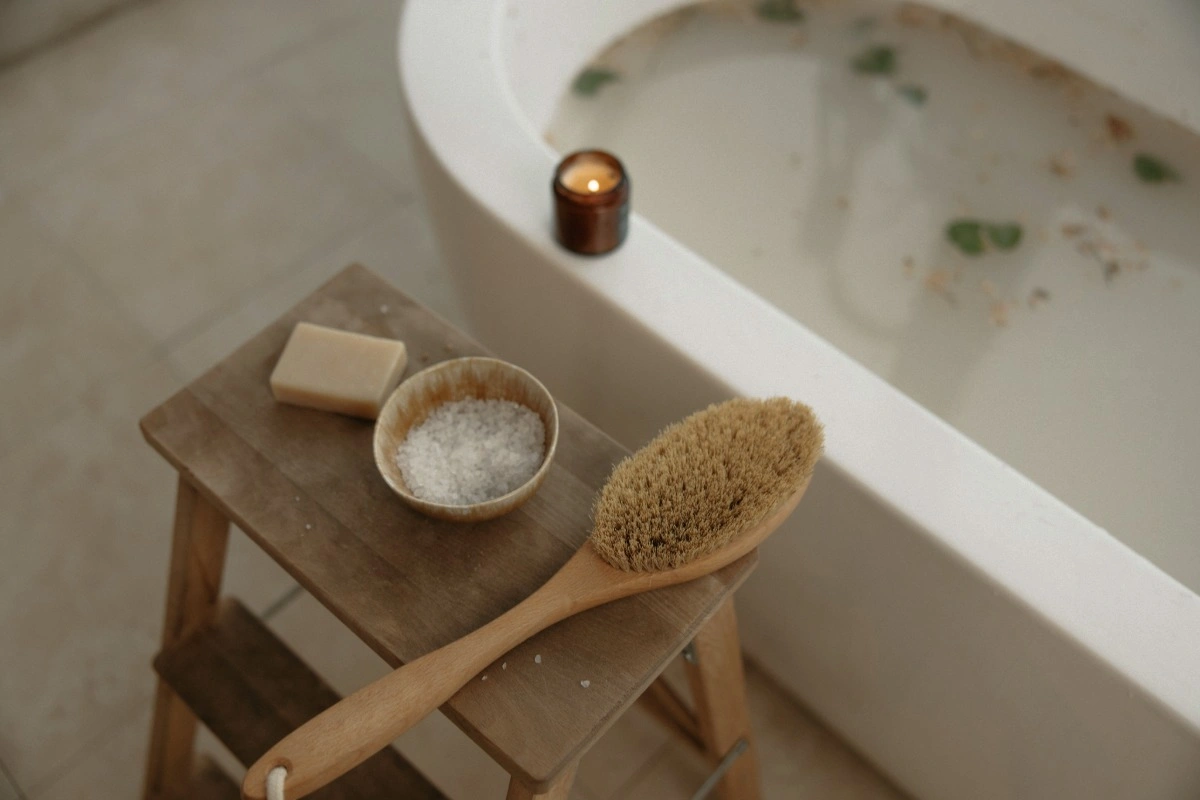
Bath salts are mineral crystals dissolved in warm water to turn an ordinary bath into a soothing self-care ritual. Many people find that a long, quiet soak can ease tense muscles, leave the skin feeling softer, and bring a sense of calm, benefits that come largely from the warmth of the water and the chance to rest.
This treatment comes in several popular varieties, including Epsom salt, sea salt, Himalayan pink salt, and Dead Sea salt, and many spas also use them in their wellness ritual. If you would like to learn more, this article explains how bath salts work and what separates a truly exceptional ritual from an average one.
What Are Bath Salts?
Bath salts are salts made for bathing, added to a tub of warm water before you step in. They belong to hydrotherapy, the practice of using water, often heated, to relax and care for the body.
What are bath salts made of? Despite the name, they are not the salt you cook with in your kitchen. These treatments are made from specially chosen salts such as Epsom salt, sea salt, Himalayan pink salt, or Dead Sea salt.
So what are they used for? People often turn to them to loosen tight muscles, unwind after a stressful day, leave skin feeling softer, and support circulation. Most of these effects come from the heat of the bath itself, with the salts adding to the experience.
The Main Types of Bath Salt
As mentioned earlier, several popular types of salt are used for this ritual, each with its own composition and common uses. Here are the main types of bath salts you can use:
| Salt type | Main composition | Texture | Commonly used for |
| Epsom salt | Magnesium sulfate | Fine to medium crystals | A soothing bath when you feel tired after a long or active day |
| Sea salt | Mostly sodium chloride, with trace minerals | Fine to coarse | A gentle, all-purpose soak for calm and relaxation |
| Himalayan salt | Mostly sodium chloride, pink from trace iron | Fine to coarse | A pink-tinted soak with a crystal-like look that is beautiful to see and calming to the eye |
| Dead Sea salt | Sodium chloride plus higher levels of magnesium, potassium, and bromide | Fine to medium crystals | A mineral-rich soak that many people find skin-softening |
How Bath Salts Actually Work on the Body
Wondering what bath salts actually do for your body? A warm soak may help ease sore muscles and joints, relax your mind, and leave your skin feeling softer. Here is how bath salts work:
- Ease joint and muscle aches: After a heavy day or a workout, warm water can help loosen tight muscles and take the edge off stiffness. A randomized controlled trial on PubMed Central (PMC) followed 64 adults aged 50 to 65 with knee osteoarthritis, and those who applied an Epsom salt solution to the knee for 20 minutes a day over seven days reported less pain and better daily function than those who received routine care alone. The study was small, short, and compared Epsom salt with routine care rather than plain warm water, but it suggests that Epsom salt may be a helpful complement to regular care for achy knees.
- Relax and unwind: Research shows that soaking in warm water can promote relaxation and ease stress, and many people find that this calm makes it easier to wind down for the night.
- Soften skin and ease itching: According to WebMD, in an article medically reviewed by dermatologist Stephanie S. Gardner, MD, people with psoriasis may notice fewer scales and less itching after bathing in an Epsom or Dead Sea salt solution. The American Academy of Dermatology advises using warm rather than hot water, keeping baths to 15 minutes or less, and avoiding scrubs, loofahs, and washcloths, which can be harsh on the skin and trigger flare-ups. WebMD also recommends skipping fragranced products and checking with your doctor before trying bath additives.
Still, it is worth knowing where these effects actually come from. Experts continue to debate how much the salt itself contributes, and National Geographic reports that there is no definitive scientific evidence that people can absorb a significant amount of magnesium through the skin during an Epsom salt bath.
Based on this, the main effects described above, such as relaxed muscles and less stress, most likely come from the warmth of the water itself, a basic form of hydrotherapy, rather than from the salt.
Even so, bath salts add to the experience, with a soothing scent from added essential oils if your skin tolerates them, a pleasant feel in the water, and a sense of ritual that makes the pause feel more special.
What Should You Look for When Choosing Bath Salts?
If you want to try this ritual at home, pay attention to a few details so you can get the most out of it. A good bath salt is simple: choose a product with a clear label, and read it the way you would read a skincare product, since the label usually tells you most of what you need to know.
Here are the details to look for when choosing bath salts:
| What to check | Look for | Be cautious of |
| Ingredient list | A full list that names every ingredient | Vague terms such as “fragrance blend” or “secret formula” |
| Salt type | A salt that is named, such as Epsom salt, sea salt, or another specific type | A label that only says “salt,” with no other information |
| Mineral claims | Specific wording that is easy to understand | A long mineral list used as a selling point |
| Scent | Essential oils that are named clearly and used in small amounts | A scent listed only as “parfum,” with no description |
| Color | Natural color from the salt, herbs, or flowers | Bright color from artificial dyes |
| Extras | A short ingredient list where each item has a clear purpose | Ingredients with no clear purpose |
| Benefit claims | Soft wording that does not overpromise, such as “relaxing” or “calming” | Strong claims such as “detox,” “cures,” or “removes toxins” |
Beyond reading the label, pay attention to the scent. Salts with a strong essential oil content can cause irritation or an allergic reaction, so do not use them on broken or irritated skin. Check which oils are listed, and if you have ever reacted to one of them, it is better to skip that salt.
How Bath Salt Is Used as Part of a Spa Ritual
A salt bath is one of the easiest rituals to do alone at home, but if you want a fuller, more relaxing experience, you can enjoy it at a spa.
At a spa, this ritual rarely stands alone. It is usually combined with other treatments as part of a sequence designed to help your body and mind slow down gradually. A typical sequence looks like this:
- Welcome: The therapist explains the steps of the ritual and, in many spas, asks about your condition first, such as sensitive skin or pregnancy, before the session begins.
- Warm-up: Steam and warm water help loosen your muscles before the soak.
- Salt soak: You soak in warm water mixed with salt, often with a light aroma from essential oils or herbs, in a private, quiet room.
- Recovery pause: After the soak, you rest, drink some water, and give your body time to readjust.
- Closing: After the bath, you receive a simple skin treatment and a quiet moment to end the session before returning to your day.
Common Mistakes That Undo the Ritual
If you want to get the full benefit of a bath salt ritual, there are a few things you should avoid, as they may reduce the comfort of the experience or leave your skin feeling dry and irritated.
- Using water that is too hot. The water should be warm, not extremely hot. Water that is too hot can strip the skin of its natural oils and leave it feeling dry, tight, or irritated. A comfortably warm bath is usually enough for the ritual.
- Soaking for too long. Around 15 to 20 minutes is generally enough for a bath salt soak. Staying in the water for too long, especially if it is hot or salty, may leave the skin feeling dry, wrinkled, or itchy.
- Using the wrong amount of salt. Using too little may make the bath feel less effective, while adding too much can leave the skin feeling tight or irritated. For Epsom salt, around 1 to 2 cups is commonly used for a standard bathtub, although it is always best to follow the instructions on the product you are using.
- Not washing your body after soaking. Some people think the salt residue should be left on the skin so the minerals can continue to absorb, but this is not necessary. After the treatment, rinse your body with clean, lukewarm water to remove any remaining salt, as residue left on the skin may cause dryness, itching, or irritation.
- Skipping moisturizer after the ritual. Even though the treatment can leave the skin feeling softer, warm water and salt may still contribute to dryness. After gently drying your body, apply a body lotion or moisturizer to help keep the skin feeling soft and hydrated.
- Soaking when you have open wounds. Bath salts may sting or irritate open wounds, severely irritated skin, or freshly shaved areas. It is better to wait until the skin has recovered before doing the ritual.
- Using bath salts too often. Using them too frequently may leave the skin feeling dry or irritated, especially if you already have sensitive skin. There is no fixed frequency that works for everyone, so it is better to adjust how often you use them based on how your skin responds.
Experiencing Bath Salts at Hammana Spa
Nowadays, many spas offer bath salts as part of their wellness treatments, and if you are looking for this experience in Bali, Hammana Spa is one destination worth considering. Located in Ubud, Hammana Spa is a luxury holistic wellness destination that offers a range of spa treatments in a private, nature-inspired setting.
One of its treatments is a steam and jacuzzi ritual that combines several elements designed to relax the body and calm the mind, including a Balinese bath salt soak. This hydrotherapy-inspired experience brings together bath salts, steam, and warm water to create a soothing and restorative wellness ritual.
This combination helps cleanse and soften the skin, encourages healthy blood circulation through the warmth of the water, and leaves the body feeling refreshed and relaxed. What makes the experience distinctive is how the bath salt soak blends with Balinese healing traditions and warm-water hydrotherapy, creating a holistic ritual that restores a sense of balance and well-being.
Turning a Simple Soak Into a Lasting Ritual
Bath salts are a simple yet beneficial ritual you can easily enjoy at home to ease muscle tension, soften the skin, and create a calming moment for yourself. To get the best experience, make sure to avoid common mistakes such as soaking for too long, using the wrong amount of salt, choosing water that is too hot, or skipping proper aftercare.
While a home soak can be a relaxing way to unwind, a spa setting can turn the ritual into a more complete wellness experience. At Hammana Spa, the Steam and Jacuzzi Ritual combines soothing steam, Balinese bath salts, and warm-water hydrotherapy to create a deeper sense of relaxation while refreshing the body and restoring inner balance in a private, tranquil setting in Ubud.